Ataköy 7-8-9-10 Ataköy Towers A Blok Kat 14 No: 169, 34156 Bakırköy/İstanbul
Gum Grafts
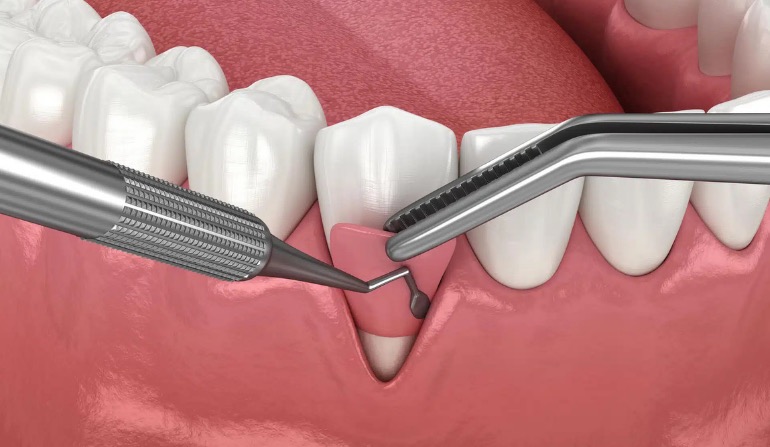
Gum Grafts
Gum grafting is surgery intended to support receded gum tissue or cover part or all of an exposed root at suitable sites. Not every recession needs an operation. Planning considers the recession pattern, tissue condition, sensitivity, difficulty cleaning and individual expectations.
Assessment before treatment
The clinician assesses progression, tissue thickness, support between teeth, the exposed root and brushing habits. Active gum disease or traumatic cleaning habits are addressed first. The goal may be to thicken tissue, make cleaning easier or cover a root. The amount of coverage achievable differs between sites. [1] [3]
Surgical options
The technique and graft material depend on the site. Tissue taken from the patient’s palate or a suitable tissue substitute may be considered. Using the patient’s own tissue creates a second healing site in the mouth. The material’s source, the extent of tissue harvesting and alternatives should be explained before treatment. [1]
Risks and limitations
Pain, swelling, bleeding, infection or partial or complete graft failure can occur. Differences in colour or texture, persistent sensitivity or further treatment needs are possible. Loss of support between teeth and local anatomy can limit complete root coverage. Surgery cannot guarantee that recession will never develop again. [2] [3]
Healing and maintenance
Follow individual instructions on cleaning the surgical area, brushing, diet and activity. Avoid pulling tissues to inspect the graft, and do not remove sutures or protective materials yourself. Contact the treating team for uncontrolled bleeding, increasing swelling, fever or unexpectedly severe pain. Appropriate brushing and periodontal reviews continue after healing. [2]
Frequently asked questions
Does all gum recession require grafting?
No. Monitoring or nonsurgical measures may be appropriate depending on the cause, progression, sensitivity and cleaning needs.
Will the whole exposed root be covered?
Complete coverage is not possible at every site. The recession pattern, support between teeth and other anatomical conditions affect the outcome.
Must tissue always be taken from the palate?
The patient’s tissue or a suitable tissue substitute may be considered depending on the technique and goal. The source and limitations are explained during planning.
Related information: Control of gum disease · Subgingival root surface cleaning.
This content provides general information. Diagnosis, suitability and treatment planning require an individual examination and any necessary investigations.
Related clinical cases
An example of this treatment has not yet been published in this section.
