Ataköy 7-8-9-10 Ataköy Towers A Blok Kat 14 No: 169, 34156 Bakırköy/İstanbul
Apicoectomy
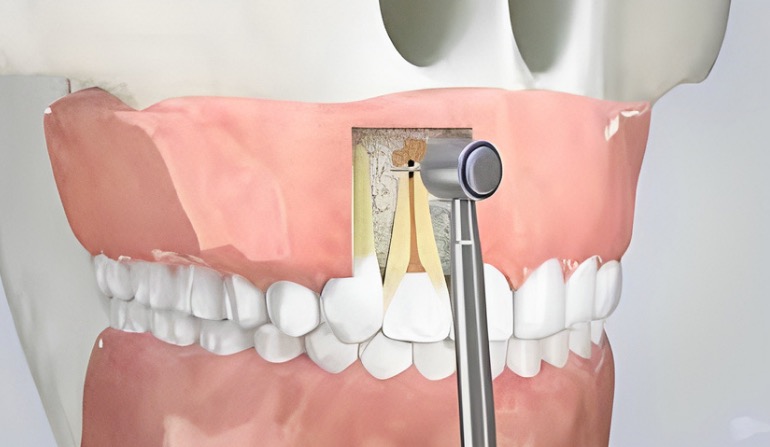
Apicoectomy
An apicoectomy is an endodontic procedure that reaches the root tip surgically to address persistent disease. A portion of the tip is removed, and appropriate root-end preparation and sealing are undertaken. Suitability is determined by examining the tooth and the surrounding tissues.
When is surgery considered?
Persistent symptoms or disease at the root tip after root canal treatment require investigation. Assessment includes the existing treatment and restoration, whether the tooth can be restored, periodontal support and the possibility of a root fracture. Suitable imaging assesses the site and nearby structures. A persistent radiographic finding does not automatically require surgery; healing and symptoms are considered together. [1] [2]
Alternatives and decision-making
Nonsurgical root canal retreatment may be preferred in some circumstances. Surgical access is considered in selected cases when retreatment is unsuitable or unlikely to address the problem. Monitoring or extraction may also be discussed according to the clinical situation. Options and the limitations of preserving the tooth are explained before treatment. [1] [2]
Procedure and possible risks
Usually under local anaesthesia, the gum is opened to access the root tip, diseased tissue is assessed, the root-end procedures are completed and the site is closed. Pain, swelling, bleeding, infection, changes in gum level or injury to adjacent structures can occur. Relationships with nerves and the sinus are assessed for the particular site. [2] [3]
Healing and follow-up
Follow individual instructions on oral care, food and activity. A wound or suture review and later clinical and radiographic follow-up are planned. Reduced pain alone does not establish complete bone healing. Contact the treating team for increasing swelling, fever, unexpectedly severe pain or bleeding that cannot be controlled. Preservation of the tooth cannot be guaranteed. [2] [3]
Frequently asked questions
Does a problem after root canal treatment always require apicoectomy?
No. The cause and the tooth’s restorability are assessed first. Root canal retreatment or other options may be appropriate.
Will the tooth need a filling or crown afterwards?
The seal of the existing restoration and remaining tissue are checked. Any required restorative care is considered alongside the surgical plan.
Are follow-up visits needed if pain has resolved?
Yes. Clinical examination and suitable images help monitor root-end healing. Follow-up intervals are set individually.
Related information: Root canal retreatment · General stages of root canal treatment.
This content provides general information. Diagnosis, suitability and treatment planning require an individual examination and any necessary investigations.
Related clinical cases
An example of this treatment has not yet been published in this section.
