Ataköy 7-8-9-10 Ataköy Towers A Blok Kat 14 No: 169, 34156 Bakırköy/İstanbul
Broken Instrument Removal
Broken Instrument Removal
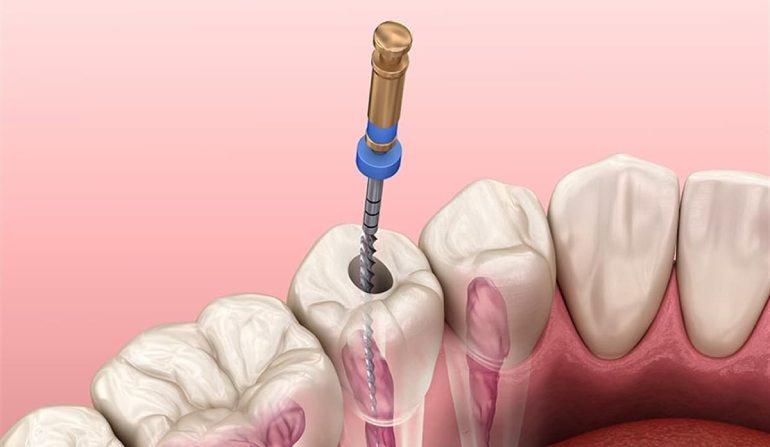
A broken instrument fragment can obstruct root canal cleaning, but it does not automatically mean that the tooth must be lost. Removal is not always necessary or possible. The aim is to control infection while preserving the tooth, rather than simply retrieving a piece of metal.
What information guides the decision?
Previous radiographs and treatment records are considered alongside fragment position, canal curvature, remaining tooth tissue and disease around the root. How much cleaning had been completed before separation also matters. Imaging is selected to answer a specific clinical question; a three-dimensional scan is not required in every case. [1] [3]
How is retrieval planned?
In a suitable case, controlled access under magnification and illumination may allow ultrasonic or gripping instruments to be used. A microscope helps visualization; it does not guarantee success. The attempt may be stopped if further dentine removal would create an unacceptable risk of perforation or root fracture. Reasons for changing the plan are discussed with the patient. [2] [3]
What if the fragment cannot be removed?
It may be possible to bypass the fragment and clean and fill the canal alongside it. In selected circumstances, treatment can be completed with the fragment retained and the tooth monitored. Persistent disease may require further treatment or endodontic surgery. Extraction may be discussed if the tooth cannot be restored. The benefits and risks of the available options are compared. [1] [4]
Why is follow-up important?
Absence of pain does not prove healing. Clinical examinations and appropriately timed radiographs are needed. Arrange reassessment for new swelling, drainage or pain when biting. Tell the clinician when earlier treatment took place and how your symptoms have changed. [3] [4]
Frequently asked questions
Must every broken instrument be removed?
No. The potential damage caused by retrieval is weighed against the fragment’s effect on cleaning and infection control.
Does a retained fragment mean extraction is inevitable?
No. A tooth may be retained in suitable circumstances, with an individualized treatment decision and follow-up plan.
How many appointments are needed?
This depends on the location, access and previous treatment. A fixed number of visits or a successful result cannot be promised before assessment.
Related information: Root canal retreatment · Apicoectomy.
This information is general. Diagnosis, suitability and treatment planning are individualized after examination and any necessary investigations.
Related clinical cases
An example of this treatment has not yet been published in this section.
